
The Hidden Cost of Disconnected Shipping Information. Most companies do not see this problem at first.
Orders are managed in the ERP. Shipping happens in another system.
Carrier rates come from different tools. Tracking updates sit on carrier websites.
Freight costs are reviewed later in reports or spreadsheets. Each system has some of the data, but nothing works together.
So when someone asks:
- Why are shipping costs higher this month?
- Which carrier caused delays?
- Are we getting the best rates?
- Where are orders getting stuck?
The answers are hard to find.
Teams search through emails. They check spreadsheets. They open different systems.
Yet they still do not get a complete picture. This is the real problem behind disconnected shipping data.
It increases costs.
It slows shipping operations.
It creates delays.
It also makes it hard to see what is happening across the business.
What Is Disconnected Shipping Data?
Disconnected shipping data occurs when shipping information is spread across systems that do not share updates in real time.
This usually includes:
- ERP systems for orders and invoices
- TMS shipping software for planning
- Carrier systems for rates and labels
- Warehouse or fulfillment tools
- Tracking platforms
Each system works on its own.
That creates gaps between teams and processes.
What this looks like every day
- The ERP says an order was shipped, but tracking is missing.
- The carrier portal has delivery data, but customer service cannot see it.
- Finance teams cannot match freight costs with invoices.
- Employees re-enter the same information across multiple platforms.
Even basic questions become difficult:
- Which shipping carriers cost the most?
- Are we using the best shipping rates?
- Which shipments are delayed?
- Where are the extra freight charges coming from?
Without proper integration of logistics data, teams work in silos.
Why Does This Happen?
Most ERP systems were not built for advanced multi-carrier shipping.
Systems such as Oracle EBS, Oracle Fusion Cloud, JD Edwards, NetSuite, and Microsoft Dynamics handle orders effectively.
However, shipping is more complex.
So companies add more tools over time.
They use:
- TMS shipping software
- Carrier APIs
- Tracking platforms
- Freight tools
- Reporting systems
Each tool solves one problem.
But together, these tools create disconnected workflows.
Common reasons behind disconnected shipping data
- Too many carrier systems
- Separate tools for parcel and freight shipping
- Old custom integrations
- Slow data updates
- Manual processes
- Limited ERP shipping functions
Over time, shipping data can become scattered across platforms.
This makes operations harder to manage.
The Business Impact
Disconnected shipping data affects more than IT teams.
It impacts the entire business.
- Higher Shipping Costs
Without real-time visibility, companies miss chances to lower freight spend.
This leads to:
- Poor carrier selection
- Missed rate savings
- Duplicate charges
- Wrong shipping methods
- Higher manual costs
Fuel prices and carrier surcharges continue to rise.
These factors make cost control even harder.
Fuel surcharges and changing carrier rates drive shipping expenses higher, making real-time rate visibility and smarter cost optimization essential for modern businesses.
- Slow Operations
Manual work slows shipping teams down.
Employees spend time:
- Copying data
- Switching between systems
- Fixing shipping errors
- Looking for shipment updates
This increases processing time for every order.
- Poor Visibility
Many companies cannot see all shipment data in one place.
That creates problems like:
- Limited shipment tracking
- Weak reporting
- Poor carrier performance data
- Delayed decisions
Without visibility, improvements become difficult.
- Compliance Problems
Disconnected systems also increase shipping risks.
This may include:
- Missing export documents
- Customs errors
- Incorrect shipment records
- Audit issues
- Dangerous goods mistakes
Manual work increases the chance of errors.
- Poor Customer Experience
Customers expect fast and accurate updates.
But disconnected systems often cause:
- Delayed tracking information
- Slow customer responses
- Wrong delivery updates
- Frustrated customers
When teams cannot see shipment data clearly, customers feel the impact.
What Smart Companies Are Doing
Many companies are moving away from disconnected shipping systems.
They want one connected platform.
Their goal is simple:
- Connect ERP and shipping data.
- Improve visibility
- Automate shipping tasks
- Reduce manual work
- Get real-time carrier rates.
Instead of checking multiple systems, teams can work from a single place.
This improves speed, accuracy, and control.
How ShipConsole Helps
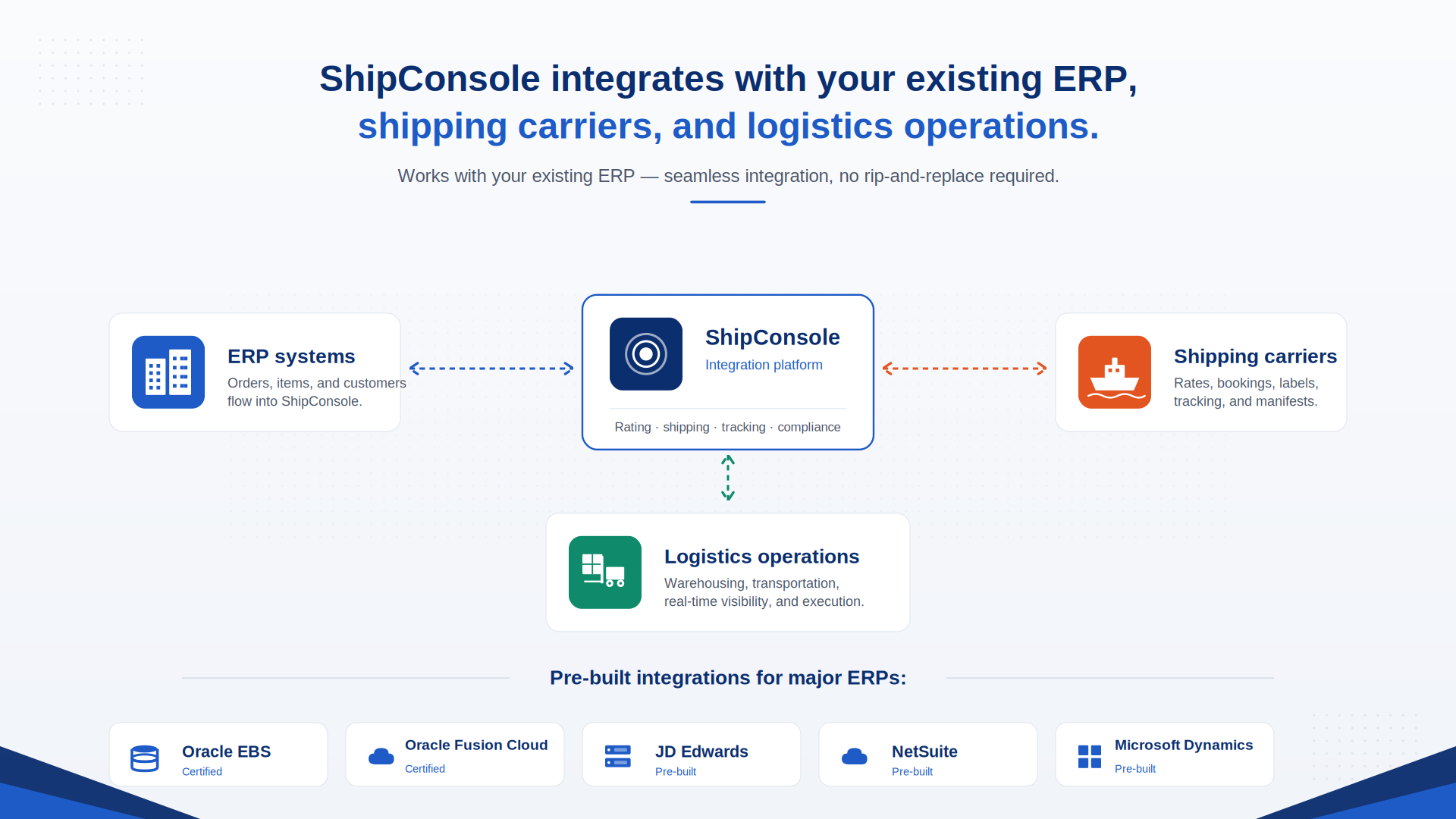
ShipConsole connects ERP systems, shipping carriers, and logistics operations into a single platform.
It works with existing ERP systems, so there is no need to replace them.
ShipConsole supports:
- Oracle EBS
- Oracle Fusion Cloud
- JD Edwards
- NetSuite
- Microsoft Dynamics
What can businesses do with ShipConsole?
- Access real-time carrier rates
- Manage parcel and freight shipping together.
- Automate shipping workflows
- Improve shipment visibility
- Reduce manual tasks
- Keep shipping data connected.
Instead of using many disconnected tools, teams can manage shipping from one interface.
Benefits of Connected Shipping Data
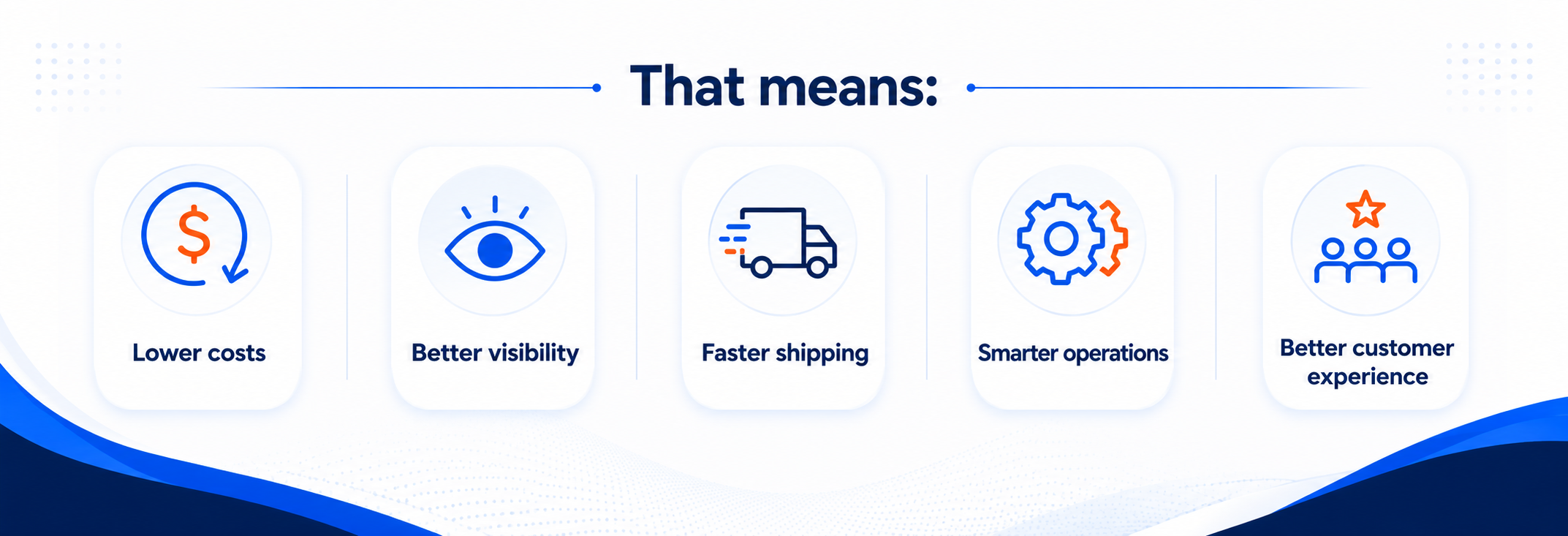
When shipping data stays connected, companies see results quickly.
Lower Shipping Costs
- Better rate shopping
- Smarter carrier selection
- Reduced freight spend
Faster Shipping Operations
- Less manual work
- Faster processing
- Fewer delays
Better Visibility
- Real-time tracking
- Centralized shipment data
- Better reporting
Better Decisions
- Faster access to shipping data
- Better performance insights
- Improved planning
Stronger Compliance
- Better documentation control
- Fewer shipping errors
- Improved data accuracy
Scalable Shipping Automation
- Connected workflows
- Support for multiple carriers
- Easier business growth
Conclusion
Disconnected shipping systems can create hidden problems.
At first, they may seem manageable.
But over time, they increase costs, slow operations, and reduce visibility.
The truth is simple:
You cannot improve shipping if your data is scattered across disconnected systems.
Companies improving logistics performance in 2026 are focusing on connected shipping operations, real-time visibility, and automation.
ShipConsole helps businesses bring together ERP systems, shipping carriers, and logistics workflows in a single platform.
If your team still manages shipping across multiple disconnected systems, now is the time to simplify the process. Request a demo with ShipConsole to experience firsthand how seamlessly integrated shipping can transform your operations and drive savings.

Pavan Telluru is the Product Manager at ShipConsole. He brings over 15 years of experience to his role and is dedicated to conducting product demos for prospects and partners on how organizations can efficiently manage their shipping execution process. He also leads marketing efforts at ShipConsole.